You found a lower fare for your sailing, asked the cruise line for the difference, and were told it does not qualify. The reason is often a code on your booking you have never looked at: the fare code.
What a fare code is
Cruise lines sell the same cabin at several prices at once, each under its own price program. The fare code, also called a rate code, is the short identifier for the program your booking was sold under. It records things like:
- Whether the deposit is refundable or non-refundable.
- Whether the fare is a public price or tied to a promotion.
- Whether it is a restricted rate that only some people can book, such as a loyalty, casino, resident or group offer.
- What the fare includes, when a promotion bundles extras.
Two guests in the same category on the same sailing can hold different fare codes and have paid different amounts. The code, together with your stateroom category, is what defines your booked fare.
The fare types you will see most
Line names differ, but most fares fall into a few families.
Non-refundable deposit fares. The deposit is kept if you cancel. Royal Caribbean labels these "Non-refundable deposit" when you book on its website and describes lower pricing as their key benefit. Change fees apply.
Refundable deposit fares. Usually more expensive for the same cabin, with a deposit you can get back within the line's cancellation terms. See refundable deposit.
Carnival's named fares. Carnival's help pages list a non-refundable deposit on Early Saver, Super Saver and casino offers, and a non-refundable total fare at booking on Pack and Go. Super Saver and Pack and Go may be priced below Early Saver but come with more restrictions and no cabin assignment.
Restricted rates. Fares for particular groups, like past guests or residents of a state or country. You can only claim against one of these if you qualify for it.
Why a claim has to match your fare type
Price drop programs compare like with like, and the fare type is part of what has to match. The lines put it differently:
| Cruise line | What the lower fare has to match |
|---|---|
| Royal Caribbean | The same cruise, same date and same room type, sold on its website or through its call center |
| Celebrity | The same ship, sail date and stateroom category. A non-refundable deposit booking can only reprice to the same fare type, while a refundable deposit booking can take the lower fare of either type |
| Carnival | The same ship, sailing, stateroom category and number of guests, at a rate you are eligible to receive. Early Saver bookings are not protected against Super Saver fares |
In practice this means a lower price on a line's website is not always a lower price for you. A refundable fare falling does not help a non-refundable deposit booking on Celebrity. A Super Saver fare dipping below your Early Saver fare on Carnival does not count. A resident rate you do not qualify for is not yours to claim. Full terms for each line are on the price protection pages.
The same applies to onboard credit and perks. Carnival notes that if your booking came with promotional onboard credit, moving to a lower fare option can mean giving that credit up. Weigh what comes attached to your current fare before you ask. The onboard credit or refund guide goes through that trade.
How to find out which fare you are on
Start with your booking confirmation or invoice. The fare type or rate code usually sits close to the cabin category, sometimes as a code and sometimes as a name like "Non-refundable deposit" or "Early Saver". The layout differs between lines and between direct and agency bookings, and we have not verified where each line prints it, so if you cannot see it, ask.
- Booked directly: the cruise line can read you the fare type from your booking.
- Booked through an agent: your travel agent sees the rate code in their booking system and can tell you what it means. See the travel agent guide.
Write it down next to your booking number and final payment date. Those three are what a claim is built from.
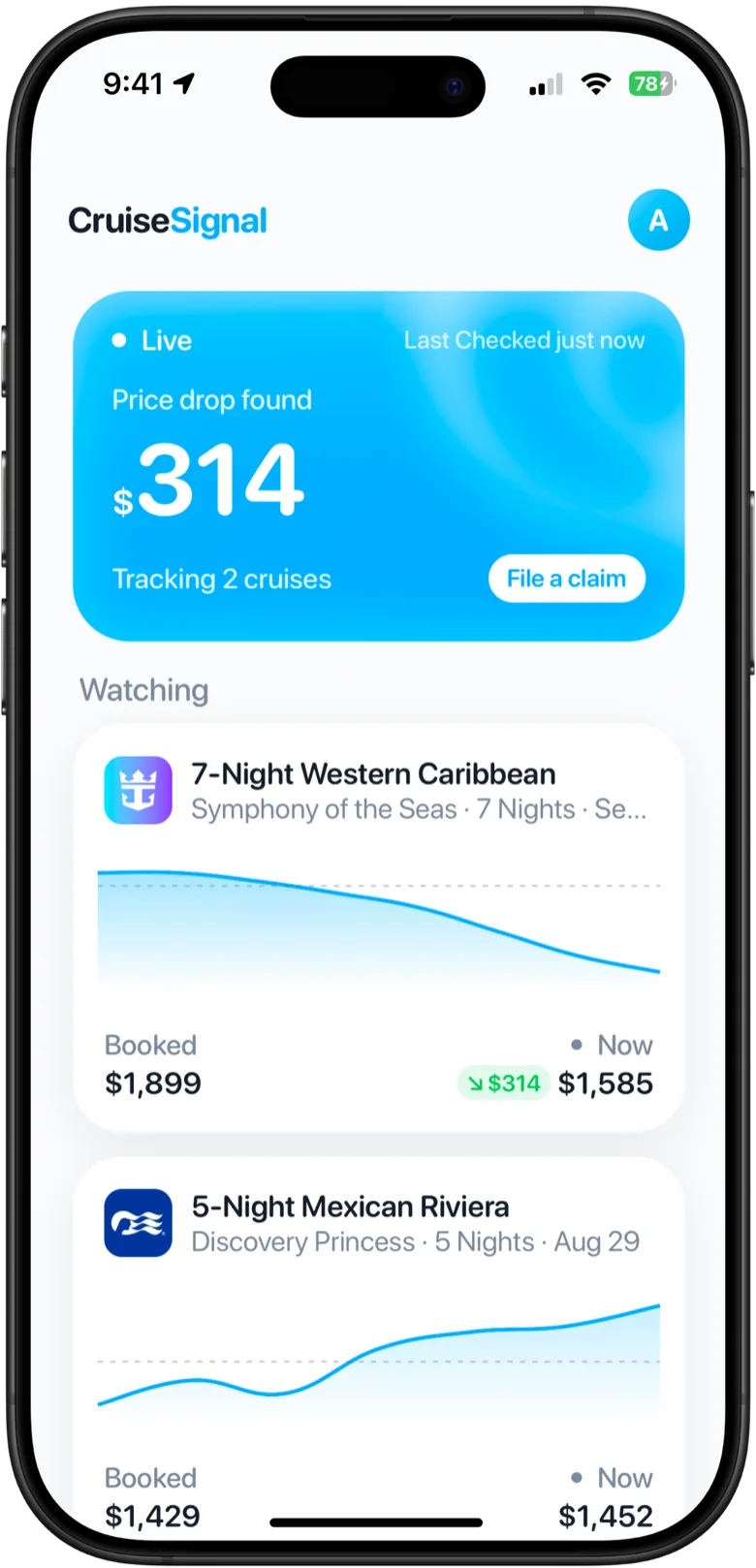
Where this leaves a price drop
A drop worth claiming is a lower fare for the same sailing, cabin category and fare type, found while your claim window is open. That is the comparison CruiseSignal makes every day for the bookings it watches: your fare against the same fare today, not against the cheapest number on the page. When it falls, you get the amount, the policy and the deadline, and you or your agent ask the line for the difference. The guide to getting a price drop covers the claim itself.