Final payment is the date the balance of your cruise is due. It is also, for almost every purpose that matters after booking, the point at which your booking stops being flexible.
When it falls
It depends on the line and the length of the sailing, and it is set at booking rather than by a universal rule. Shorter cruises usually fall due somewhere around 75 to 90 days before departure. Longer and more expensive itineraries are often further out, sometimes 120 days or more. Your booking confirmation carries the exact date, and it is the one date on that document worth putting in a calendar.
What changes when it passes
Before final payment, your booking is relatively easy to change. Most cruise lines will reprice it if the public fare drops, which means a refund or a smaller balance due. Cancellation penalties are usually limited to your deposit, and on a refundable deposit often nothing at all.
After final payment, three things happen at once:
- Repricing generally stops. On most lines a lower fare no longer produces a refund.
- Cancellation penalties escalate on a published schedule, rising as the sail date approaches until you would forfeit the full fare.
- The remedies shrink. Where anything is still available, it is usually onboard credit or a cabin upgrade rather than money back.
What each line still allows afterwards
The differences here are large enough to matter when you choose who to sail with:
- Carnival keeps Early Saver price protection running until two business days before sailing, paying onboard credit. It is the longest window of the lines we track.
- Royal Caribbean and Celebrity offer a cabin upgrade, subject to availability, when a better category is priced at or below what you paid.
- Norwegian varies by region, fare type and channel, and does not reliably offer a post-final-payment route.
Full detail, with each line's own published terms, is on the price protection pages.
Why it shapes how tracking works
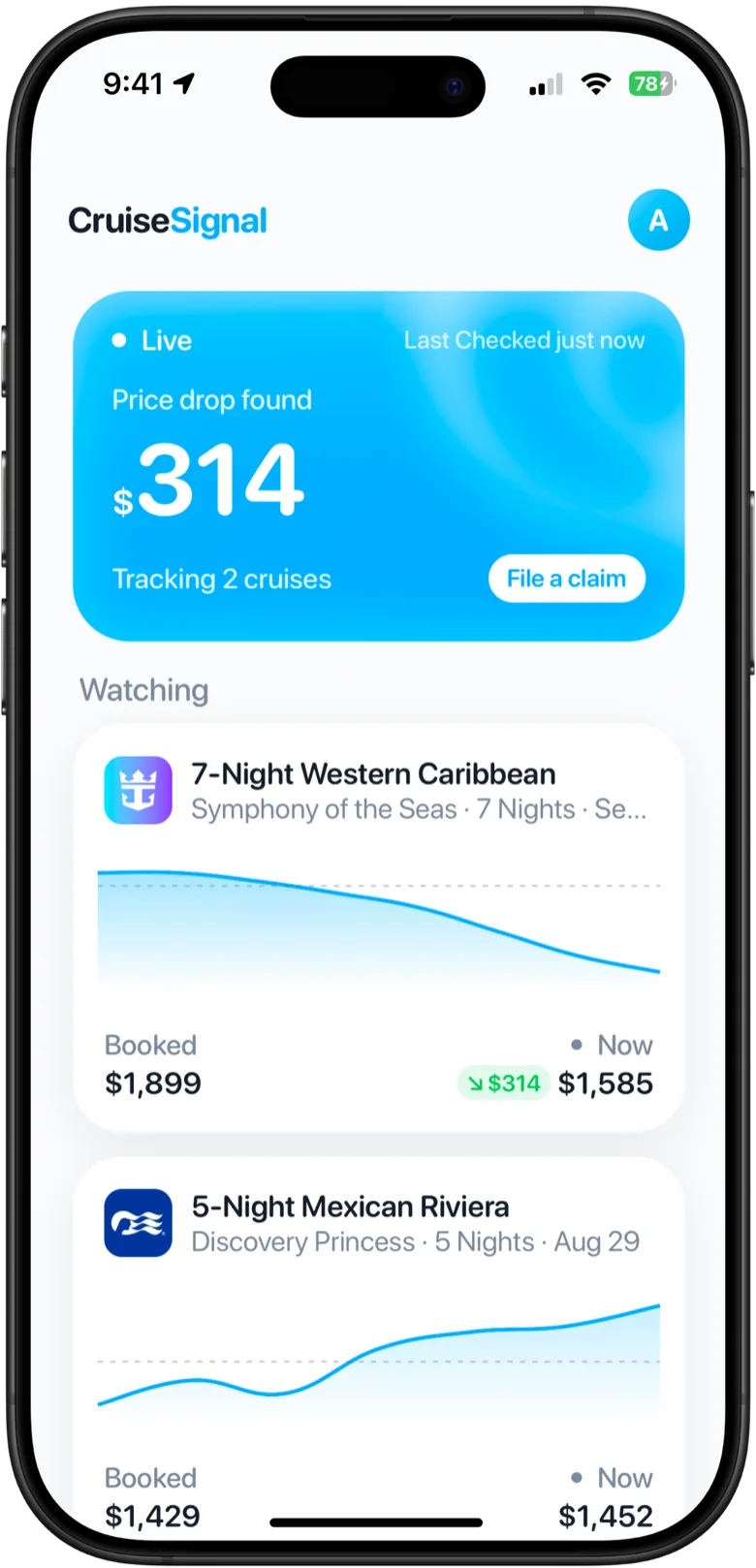
Because the deadline is fixed and known, the value of watching a fare is not evenly spread across the year. A drop found three months before final payment is worth the full difference. The same drop found a week afterwards may be worth nothing at all.
That is why CruiseSignal checks more often as your final payment date approaches, and why the countdown to it sits on every tracked booking. The fare matters, but the date is what turns a fare into money.